Ask people about "the future of AI" and they picture humanoid robots or superintelligence. The real future is less cinematic and more useful: AI disappearing into the background of ordinary life, handling small frictions you currently tolerate. Here's what's actually coming — no hype, no doomsday.
Your home becomes quietly competent
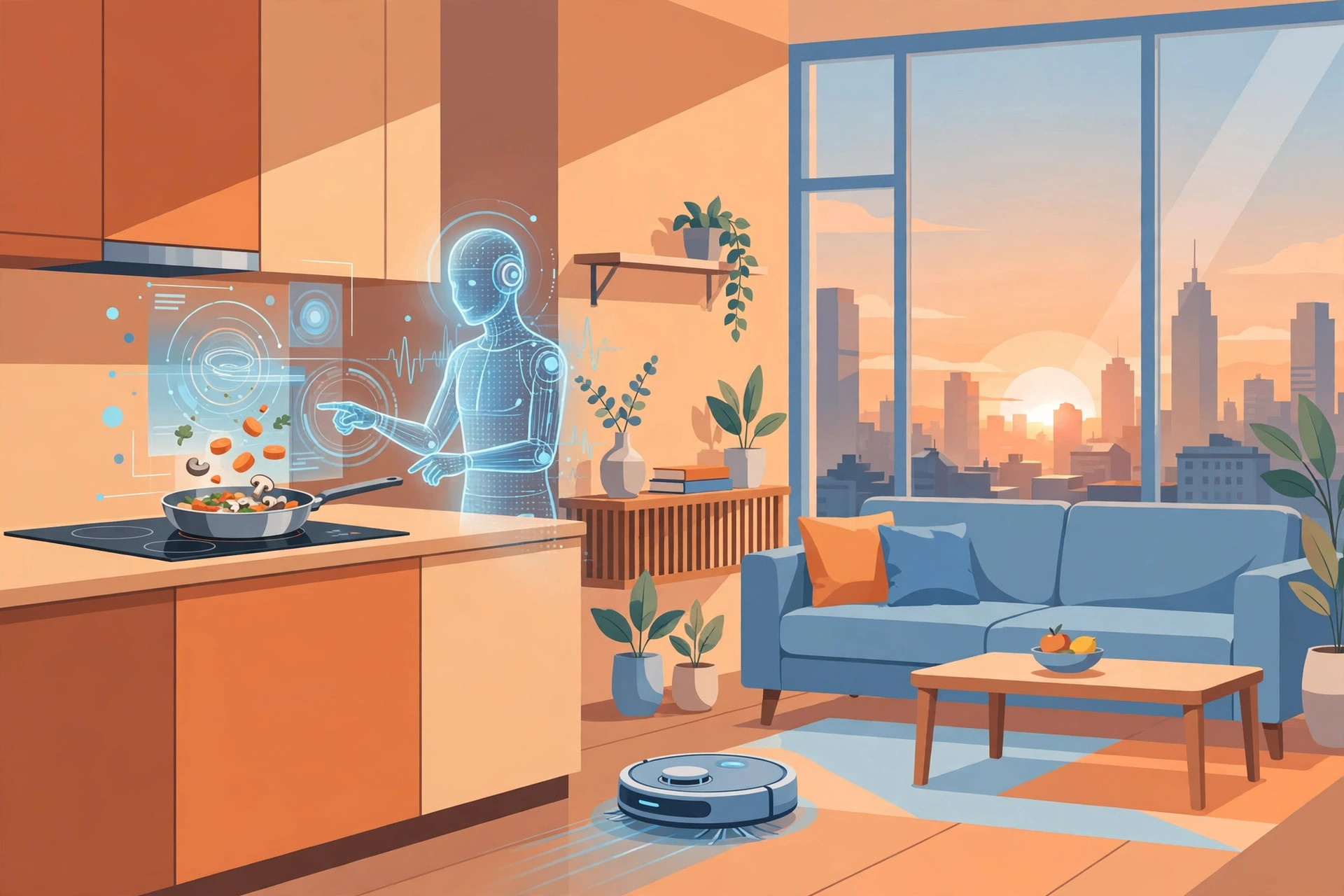
Smart homes are growing out of their awkward phase. Instead of barking commands at a speaker, you'll describe outcomes: "make the house comfortable for movie night," and lighting, temperature and blinds adjust together. Kitchens get the biggest upgrade — ovens that recognize dishes and set themselves, fridges that track expiry and suggest recipes for what's inside. The shift: from controlling devices to describing intentions.
Healthcare gets a second opinion — instantly
AI already matches specialists at reading certain scans; the next five years bring it to the clinic down the street. Expect: triage assistants that route you to the right doctor before you arrive, continuous monitoring from wearables that flags problems weeks earlier, and plain-language explanations of your own test results. The honest caveat: AI advises, doctors decide — regulation and liability mean humans stay firmly in the loop, which is exactly as it should be.
Commuting and travel smooth out
Full self-driving everywhere remains further off than headlines suggest, but the near-term wins are real: traffic systems that adapt signals to actual flow, navigation that reroutes around trouble before you hit it, and travel planning where one conversation books flights, hotels and itineraries matched to your taste. The airport security line, sadly, remains human.
Work changes shape, not just speed
The pattern is consistent across industries: AI absorbs the repetitive middle of jobs — drafting, summarizing, data-crunching, first-pass analysis — while humans keep judgment, relationships and creativity. Job titles will shift (expect "AI-assisted" to become as invisible as "computer-assisted" is today), and the most valuable skill becomes knowing what to ask and how to verify the answer. If that sounds familiar, our prompting guide is the place to start.
Shopping and services get personal — for better and worse
Recommendations evolve from "people also bought" to genuine personal shoppers that know your sizes, budget and taste. Customer service becomes instant and actually competent for routine issues. The trade-off is data: personalization this good requires the system to know you well. The winners will be services that earn that trust with transparent controls — and users who demand them.
Future-proof yourself with two habits: learn to direct AI (clear instructions, critical review of outputs) and double down on human skills (judgment, empathy, taste). The people thriving in 2030 won't be the most technical — they'll be the best at combining AI speed with human wisdom.
What probably won't happen by 2030
- Robots doing all household chores — manipulation (hands, not brains) is still brutally hard. Your dishwasher is safe.
- AI replacing doctors, lawyers, teachers — augmenting them, yes; replacing, no. Trust and accountability don't automate.
- A single superintelligence running everything — the realistic path is thousands of narrow systems, each good at one thing.
How to prepare (without overhauling your life)
- Use one AI assistant weekly for real tasks — familiarity beats theory.
- Learn the privacy controls of the tools you adopt (our safety guide covers this).
- Stay curious, not anxious — follow one quality source on AI news instead of doom-scrolling headlines.
The bottom line
The future of AI isn't a robot uprising — it's a thousand small conveniences compounding into a noticeably easier daily life. Homes that understand intentions, healthcare with instant second opinions, work freed from drudgery. The technology is arriving either way; the only choice is whether you learn to steer it or let it steer you.