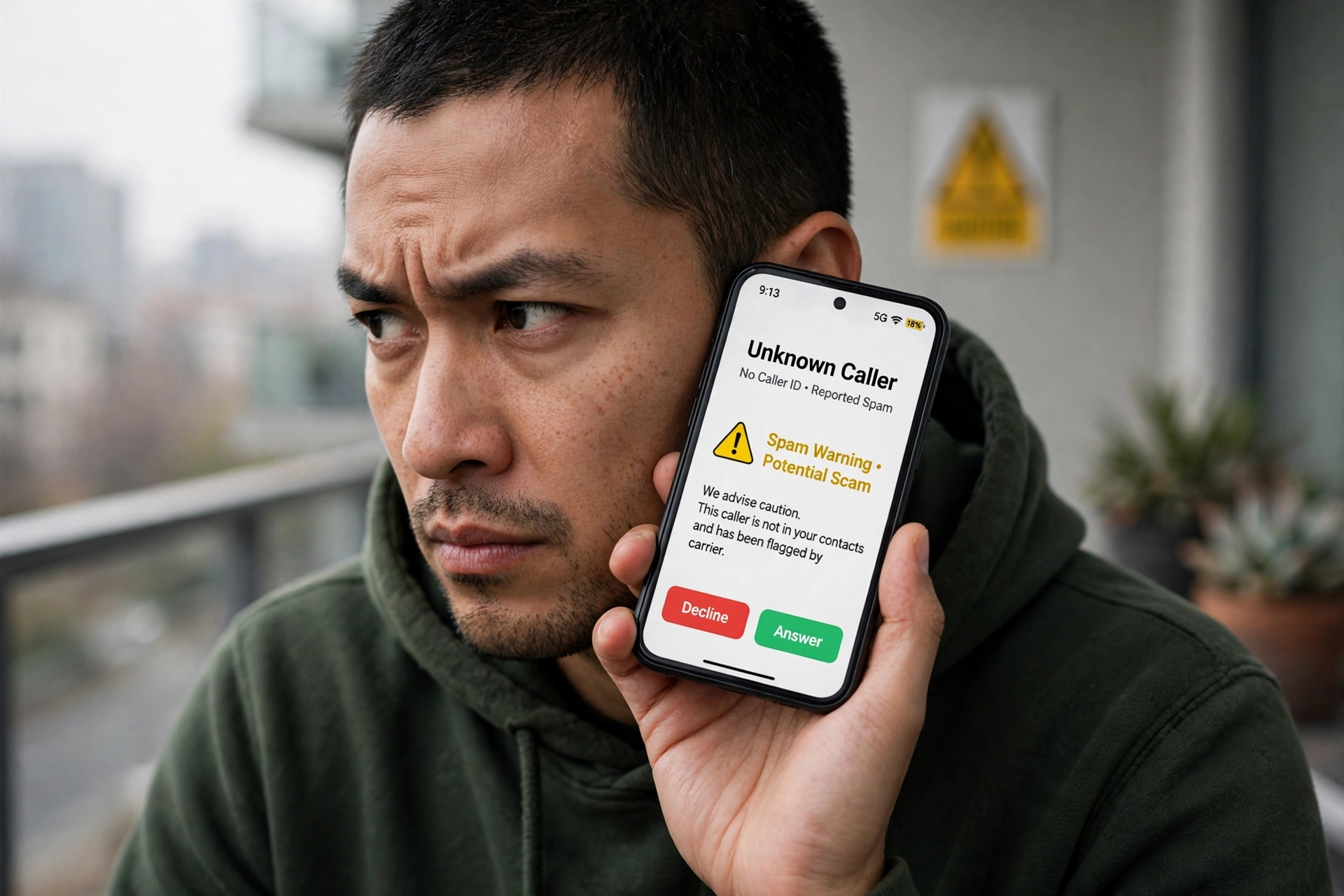
You spot an AI voice cloning scam call by what it asks, not how it sounds: an urgent emergency, secrecy, and payment by gift card, wire transfer or crypto. Hang up, call the person back on a number already saved in your phone, and ask for your family code word. If they can't give it, it's a scam.
Picture it: your phone rings, and it's your son. He sounds shaken. He's been in an accident, he says, and he needs money right now — and please don't tell mum, it'll only worry her. Your gut says help him. That's exactly what the scam is built to trigger.
Here's the uncomfortable part: scammers no longer need to impersonate anyone. They can clone a voice from just a few seconds of audio — a TikTok clip, a voicemail greeting, a podcast appearance. The FBI has warned about exactly this kind of impersonation, and reported AI-related fraud losses in the US reached roughly $893 million in 2025. The voice is no longer evidence. So what is?
What Does an AI Voice Cloning Scam Sound Like?
Honestly, it sounds like the person. That's the whole problem, and pretending you can always hear the difference is dangerous advice. Still, clones do leave hints, and they're worth knowing:
- Oddly even pacing. Real people hesitate, breathe, interrupt themselves. Clones can sound a little too smooth, with pauses in slightly wrong places.
- Flat emotion at the wrong moments. Panic that never quite rises or falls, or a voice that doesn't react naturally when you ask an unexpected question.
- Missing background noise. A real call from a roadside or a hospital has sounds around it. A clone is often eerily clean.
- Answers that dodge specifics. Ask something only the real person would know and watch the conversation slide sideways instead of answering.
Treat all of these as hints, never proof. A bad phone connection can make a real call sound strange, and a good clone can sound perfect. The reliable tests are about behaviour, not audio.
The 30-Second Test That Actually Works: Hang Up and Call Back
This is the single most important habit in this whole article, and it's the one the US Federal Trade Commission keeps repeating: hang up, then call the person back on a number you already know is theirs.
1. Don't argue on the call. Just say you need a moment. You owe a stranger — or a clone — nothing.
2. Hang up. Really hang up. Don't let them talk you out of it.
3. Call the number saved in your contacts. Not the number that called you, and not a number the caller gives you. The one already in your phone.
4. If they don't answer, call someone else who can check. Another family member, a colleague, the school or workplace.
A genuine emergency will still be an emergency two minutes from now. The caller who insists there is no time to check is telling you everything you need to know. If the story is real, the real person will be relieved you checked. If it's a scam, one call just ended it.
Set a Family Code Word Today (It Takes Five Minutes)
Here's the defence almost no family has set up yet, even though it's the simplest one: pick a private word or short phrase that only your family knows — something that has never appeared online. Agree that anyone claiming to be family in an emergency must say it before you act.
Keep it silly and memorable. "Purple giraffe" beats a solemn password nobody remembers. Tell grandparents too, because older adults report some of the largest losses from these scams. And have the conversation before a crisis, not during one: "If someone calls claiming to be me in trouble, ask for the code word first."
This pairs with the basics we cover in our online safety guide — and if you're unsure whether a photo or video is genuine, our guide on how to tell if an image is AI-generated covers the same trust problem in a different form.
What If You've Already Sent Money?
Don't feel foolish — these scams work on smart people, because they hijack panic, not intelligence. Act fast: contact your bank straight away and ask what can be frozen or reversed, keep the number, the time, and exactly what was said, and report it to the police and, in the US, the FTC at ReportFraud.ftc.gov. Wire transfers and gift cards are hardest to recover, which is precisely why scammers demand them — real hospitals and lawyers never ask for bail in gift cards.
One more thing worth doing: cut off the raw material. You don't need to stop posting videos, but making voice clips and videos private where you can makes cloning harder. And if a call ever makes you feel rushed, secretive, and panicked all at once — that's not a coincidence. That's the script.
A familiar voice proves nothing any more. The proof is a callback to a trusted number and a code word only your family knows. Set both up today, while nobody is panicking.
Frequently asked questions
Can you tell an AI-cloned voice from a real voice by listening?
Not reliably. Clones can sound extremely convincing over the phone, so listen for hints but never rely on sound alone — hang up and call back on a number you already trust.
What is a family code word for scam calls?
A private word or short phrase only your family knows, agreed in advance. If a caller claiming to be family cannot say it, treat the call as a scam, no matter how real the voice sounds.
What should I do if I sent money to an AI voice scam?
Contact your bank immediately, keep the call details and any receipts, and report it to the police and, in the US, the FTC at ReportFraud.ftc.gov. Speed matters most for wire transfers and card payments.
Sources: FTC guidance on imposter scams, FBI Internet Crime Complaint Center warnings on AI impersonation, and our AI agent password safety guide for the wider picture of AI-era account security.