"Machine learning" gets thrown around as if everyone studied it in college. Almost nobody did — including many people who use the phrase confidently in meetings. Here's the honest, jargon-light version of what it actually is.
The one-sentence version
Machine learning is teaching computers to recognize patterns from examples, instead of programming every rule by hand. That's it. Traditional software is a recipe: if this, then that. Machine learning is an apprentice: show it ten thousand examples, and it figures out the recipe itself.
A concrete example: spam filters
Nobody writes rules for every possible spam email — spammers would dodge them in a day. Instead, engineers feed the system millions of emails already labeled "spam" or "not spam." The system notices patterns humans would never articulate: certain phrases, odd sending times, suspicious link structures. When a new email arrives, it checks those patterns and makes a call. It was never told the rules — it learned them from examples. That learning-from-examples loop is the entire field in miniature.
The three ingredients
- Training data — the examples. More (and more varied) examples generally mean a smarter system. This is why data is called the new oil.
- A model — the pattern-finding machinery. Think of it as a very flexible formula with millions of adjustable knobs.
- Training — the process of turning the knobs until the model's guesses match the examples. "Learning" is just knob-turning, repeated billions of times.
Three flavors you'll hear about
Supervised learning — learning with answer keys
The examples come labeled: this photo contains a cat, this email is spam, this tumor scan is benign. The system learns to predict labels for new, unlabeled cases. Most practical ML today — recommendations, fraud detection, voice assistants — is supervised.
Unsupervised learning — finding structure alone
No labels; the system just looks for natural groupings. Streaming services use it to discover "viewers who liked X also cluster around Y" without anyone defining the clusters. It's how businesses find customer segments they didn't know existed.
Reinforcement learning — learning by trial and error
The system tries actions and gets scores: +10 for winning, −10 for crashing. Through millions of attempts it discovers strategies no human taught it. This is how AI mastered chess, Go and complex video games — and increasingly, how robots learn to walk.
What are neural networks, then?
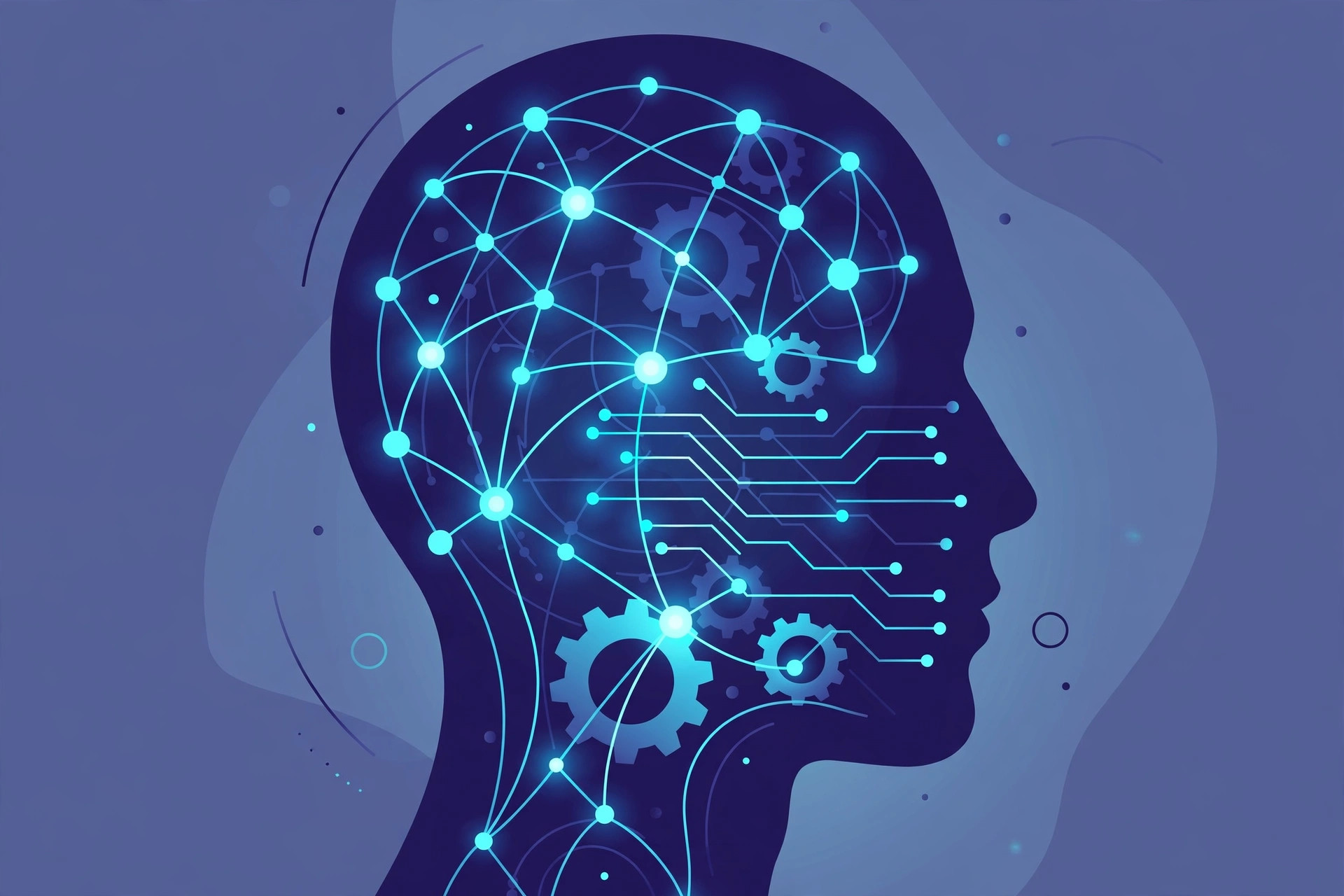
A neural network is just a particularly powerful type of model, loosely inspired by brain cells. Layers of simple units pass signals forward, each layer detecting progressively fancier patterns — edges, then shapes, then faces, then "your friend at the beach." Deep learning simply means neural networks with many layers. When people say "AI" in 2026, they usually mean deep learning systems.
When someone says "our product uses AI," ask which kind and trained on what data. Those two answers reveal more than any marketing page — including whether the product can actually do what it claims.
Machine learning you already use daily
- Phone keyboards predicting your next word (trained on billions of typing sessions).
- Photo apps grouping pictures by face (supervised image recognition).
- Navigation apps estimating arrival times (learning from millions of past trips).
- Spam and scam filters guarding your inbox and calls.
- Recommendations on every shopping and streaming site (unsupervised clustering + supervised ranking).
What machine learning can't do
Honest limits matter. ML systems don't understand — they match patterns, which is why they fail on situations unlike their training data. They're only as fair as their data (biased examples produce biased decisions). And they can't explain their reasoning the way a person can, which is why high-stakes uses — medicine, lending, criminal justice — need human oversight, always.
The bottom line
Machine learning = learning patterns from examples instead of hand-written rules. Data is the textbook, the model is the student, and training is the studying. You interact with it dozens of times a day already — now you know what's happening under the hood.